
Ages of Earth (No Time for Evolution)

(No Time for Evolution)
by Ted Holden
| Aside from the overwhelming arguments against evolution which arise
from mathematics and probability, there is a huge body of evidence indicating
that the Earth itself is simply not old enough to provide the kinds of
time spans which evolution depends on. In the age prior to the internet,
scientists and others who ought to know better were able to keep this kind
of evidence more or less tamped down, each individual item being described
as either wishful thinking on the part of religionists or as another "exception
which proves the rule". This is clearly no longer an option for them.
The ages of the Earth which we read appear to be based on two general kinds of things, i.e. decay-based dating techniques, which have several kinds of inherent problems, and a circular system of dating rocks by fossils, and then fossils by rocks. You can do your own google searches on decay based systems. Somebody would still have to convince me that heavy metals which we find anywhere near the surface of the Earth are indiginous to the Earth and didn't arrive here via some sort of impact event. The problem is that there's no real way to picture the Earth condensing from stellar material as is claimed, and the heavy metals end up anywhere other than the center. There is a possibility that ages deduced for strontium, thorium etc. which we find near the Earth's surface may be good for the strontium and thorium, but not for us. I am not a young Earth Creationist. I believe that the creation stories we read in literature invariably describe the creation of the Earth and our local solar system, but that the Universe itself is, in all likelihood, eternal and has always been here. In particular, the big bang idea to me is an absurdity. Having all the mass of the universe collapsed to a point would be the mother of all black holes; how's anything going to bang its way out of that? Aside from that, the idea of an expanding universe has been pretty thoroughly refuted as a misinterpretation of redshift data, and that story can be read in Halton Arp's books, or viewed at:
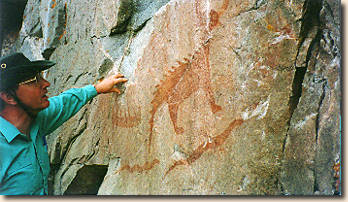
We actually have one example of a fairly new planet in our system (Venus), and the fact that Earth and Mars do not resemble Venus in any way, shape or fashion strongly indicate that Earth and Mars are older. In all likelihood not millions of years older, but older. The lack of a regolith, the 900 degree surface temperature, pristine surface features and massive CO2 atmosphere we see on Venus are features of a new planet. In other words, Venus is ball park for the kind of age estimate which Bishop Usher once tried to deduce for the Earth from the bible, but the other planets are older than that. In my estimation, once you allow for a single cosmic catastrophe of the type which Velikovsky described and which you read about in ancient literature, the various assumptions used in dating schemes pretty much get ruined, and the real age of the Earth is basically unknowable. Bob Bass notes: Lord Kelvin stopped Darwinism dead in its tracks when he made an irrefutable thermodynamic calculation that at the rate which the Earth is cooling off (and heat is being conducted from the interior to the surface and then radiated into space) the Earth could not possibly be more than 2 to 20 million years old. This really put "the fear of God" into the staunchest Darwinists for a while.which would seem to put a 200M year cap on it, but I would seriously doubt that the Earth is that old. The kind of math which Bass mentions is very common and is used in the form of trig-function transforms for data compression in communications and for things like jpeg files all the time, and Bass, being one of America's best mathematicians would have no difficulty using it properly. The fact that these calculations were never redone previously is clearly due to fear of consequences and not to any lack of technical ability or skills in academia. We are told that 65M years separate us from the age of dinosaurs, but a mountain of evidence has arisen indicating that there were leftover dinosaurs just a few thousand years ago, and that the main age of dinosaurs was a few thousand or a few tens of thousands of years back, and not 65M years. Midrashim describe several kinds of things (reem, ziz bird etc.) which were almost certainly leftover dinosaurs walking around just prior to the flood, and describe Noah strapping several such, which were too large for the cages, to the decks of the ark. Human and dinosaur footprints have been found together in more than one site and denials by evolutionites ring hollow. The Ica stones of Peru are another piece of the puzzle. Ian Tresman, of the SIS in England, notes with respect to the Ica stones that: "Stronger evidence for the contemporaneity of man and dinosaurs (not necessarily in the Cretaceous period) are the engraved stones of Ica, Peru, discovered by local villagers in 1961. Some of the more intricately carved specimens show dinosaurs of identifiable species, such as the stegosaurus. Again, there have been confessions of fraud, but these have failed to invalidate the evidence that many of the stones are genuine. Their sheer number - over fifty thousand of them - and their uniqueness of style argue against many being forgeries. Some were found in sealed deposits by archaeologists. The geologist Eric Wolf, who examined 33 stones, found that a layer of oxidation covered the incisions, suggesting that they were of great age.And then of course, there is the image of the stegasaur at Agawa Rock, Ontario...
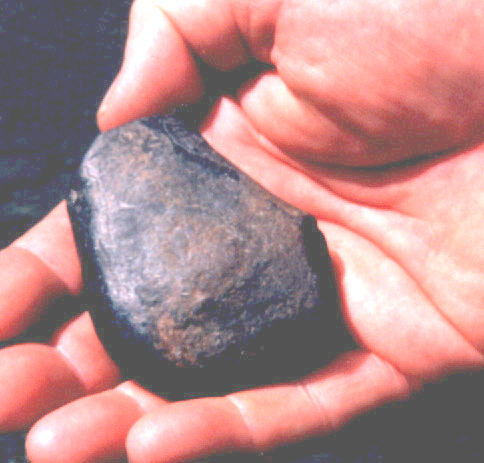
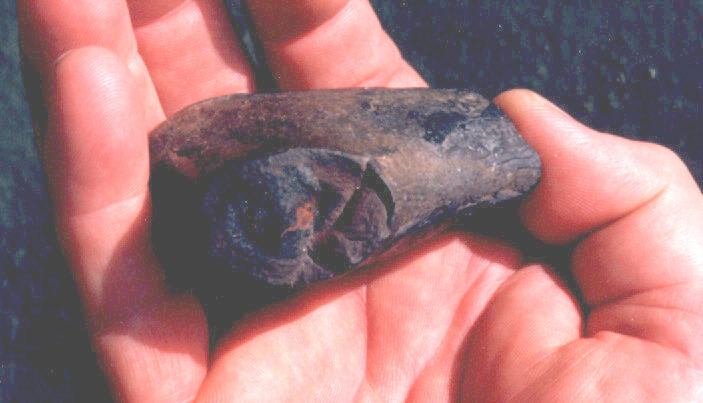
American indians generally regard the 65 million year thing which Darwinists insist upon as a sort of a whiteman's fairytale. Vine Deloria is a former president of the National Council of American Indians and the best known American Indian author, his "Custer Died for Your Sins" being a standard university text on Indian affairs. His "Red Earth, White Lies" describes the phenomenon of dinosaurs in Indian oral traditions. The stegosaur in particular ("Mishi-Pishu", or water-panther) is described as having a sawblade back, red fur, and a spiked tail which he used as a weapon, all of which are shown on Agawa Rock and on various similar petroglyphs at various sites in North America. And then again, there are Ed Conrad's findings. Ed started out looking to make spare money finding fern fossils in abandoned coal mine sites in Northwestern Pennsylvania, which is a fairly common passtime up there, and at several of the 20 or so sites he visited, started turning up things which are not supposed to be there, including teeth, claws, tusks, and bones of large land animals, in overwhelming likelihood including large hominids. No land animals larger than a frog are supposed to have lived in the carboniferous age. Even finding dinosaur bones in carboniferous strata such as Eds coalmines should blow the standard dating theories to hell. The ONLY things which are supposed to have been alive on the Earth at that remote time are fern trees, fish, insects, and the occasional amphibian. Having seen much of Ed's collection up close, I would say that it should present an overwhelming problem for standard theories. Richard Dawkins, Oxford has apparently noted: "alleged human bones in the Carboniferous coal deposits. If authenticated as human, these bones would blow the theory of evolution out of the water."Some of Ed's collection items are enigmatic or problematical, but many are not. The item in my hand below:
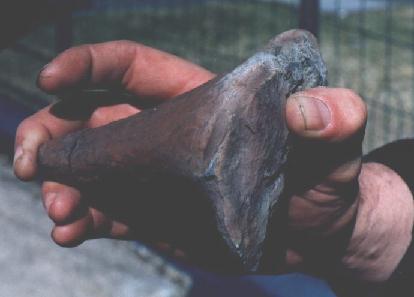
is assuredly bone, since flakings from it show the identical system of porosity as animal bone flakings, is perfectly bilaterally symmetric, and consiste of an outer layer of about .3" of bone and an inner layer of mineral deposits which replaced the softer tissue and marrow. The only thing I know of which turns a right angle like that is a mandible bone; the piece may therefore be a mandible piece or it might be some other sort of bone I'm less familiar with, but it DEFINITELY does not belong in the carboniferous age. For that matter, neither does the huge tooth in my hand in this image:
That tooth is not serrated, and is clearly not that of a shark or any sort of a tyrannosaurid or raptor. My GUESS would be that it belonged to some sort of a cat or bear, but it would be the biggest cat or bear anybody ever heard of. Anybody going after him would probably want to bring the 50 at least; it's not obvious that a 308 or 30:06 would even get his attention. Like I say, there's just too much of this evidence sitting around now for anybody to go on believing that more than a few thousand years separates us from the age of dinosaurs and, without those vast ages, as Dawkins notes, evolution is pretty much dead |

All contents copyright Designed Universe and the respective authors 2003© |